
Panama: Panama City, the Canal, and the latest matchups
Panama Mystery: The Numbers Don't Add Up in Missing Family Case
A Family Vanishes: Initial Reports and Discrepancies
The disappearance of Ghussan Iqbal and his two children in Panama back in May is, putting it mildly, unsettling. The bare facts, as reported, are these: Iqbal, a Canadian citizen, vanished with his two-year-old daughter, Nousaybah, and seven-month-old son, Musa, from their residence in Bocas del Toro province. He left without essentials – phone, wallet, money, even food. A week later, Musa's body was found in the Changuinola River. The search for Iqbal and Nousaybah continues, but six months on, the family's frustration is palpable.
What immediately raises red flags is the shifting narrative surrounding the event. Initially, Iqbal's relatives were told he "ran away" with the children, a theory attributed to his mental health. However, the family disputes this, stating they saw no signs of distress during a video call just days before. (The timeline here is crucial; any investigation hinges on establishing a precise sequence of events.) The brother and sister-in-law, Sulman and Nagham Iqbal, traveled to Panama and quickly became suspicious of inconsistencies in the wife's account.
The lack of surveillance footage showing Iqbal leaving with his children further complicates matters. As Nagham Iqbal stated, they "literally disappeared off the face of the earth." The terrain itself presents a challenge; the family finds it hard to believe that Ghussan, with "very little wilderness or survival experience," could navigate the mountainous jungle with two young children. Given the recovery of Musa's body in a location allegedly predicted by the wife, the family now suspects foul play. But what motive could explain such a tragedy?
Bureaucracy and a Lack of Urgency: A Systemic Failure?
Beyond the immediate mystery, the Iqbal family's experience highlights a frustrating reality: the limitations of consular assistance when a Canadian citizen goes missing abroad. They describe a slow, unresponsive bureaucracy, both in Panama and within Global Affairs Canada (GAC). "We can only communicate with them through email and it takes days to respond," Nagham Iqbal stated. This lack of timely communication is not just a personal inconvenience; it can directly impact the investigation's effectiveness. Time is of the essence in missing persons cases.
The family's frustration is compounded by the perceived lack of resources and urgency from Panamanian authorities. While acknowledging the kindness and helpfulness of individuals, they point to systemic delays, especially in obtaining forensic test results. Sulman Iqbal expressed the sentiment that "there’s no sense of urgency for this case, no thorough investigation." Getting the Canadian government to apply pressure to expedite the process has also proven difficult.
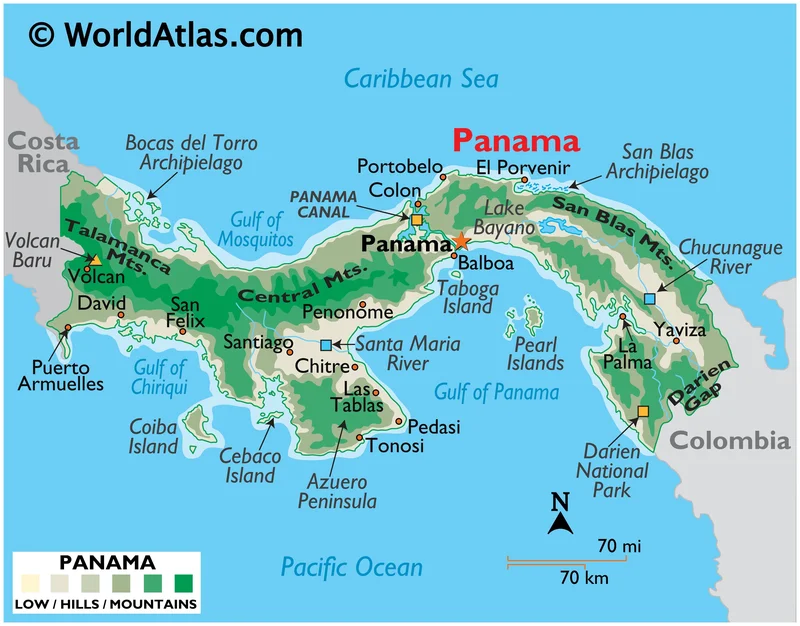
Here's where a methodological critique is necessary: How reliable is the information coming out of Panama? The article mentions violent pension reform protests and a state of emergency in Bocas del Toro around the time of the disappearance. Could these events have hampered the investigation? Could the political unrest have diverted resources and attention away from the Iqbal case? It's a factor that needs to be considered, even if it's difficult to quantify.
And this is the part of the report that I find genuinely puzzling. GAC states that the safety and security of Canadian citizens abroad is a "top priority." Yet, the Iqbal family feels abandoned, left to navigate a complex and opaque system with minimal support. There's a clear disconnect between the official rhetoric and the lived experience. As the family told CTV News, they have " no idea’ what happened to their loved ones."
Unanswered Questions and Lingering Doubts
The inconsistencies in the wife's statements also raise serious questions. The family alleges she used multiple identities, misrepresented her background, and provided conflicting accounts of the events leading up to the disappearance. While these allegations don't constitute proof of wrongdoing, they warrant further scrutiny. Why would someone fabricate details about their identity and education? What was she hoping to gain?
The article paints a picture of a family caught in a bureaucratic maze, grappling with conflicting information and a growing sense of despair. They are left with "no real answers" and the agonizing uncertainty of not knowing what happened to their loved ones. "Literally any theory is possible at this point," Sulman Iqbal said. The 'ran-away theory' doesn’t appear to hold water.
The lack of closure is particularly devastating. As Sulman Iqbal poignantly stated, "We haven’t even been able to start the process of grieving." The family is trapped in a state of limbo, unable to move forward until they have a clearer understanding of what transpired. Until there is definite evidence otherwise, the family said they will always hold out hope.
The Truth Is Buried in the Details
The disappearance of Ghussan Iqbal and his daughter Nousaybah is a tragedy compounded by unanswered questions, bureaucratic hurdles, and a shifting narrative. The numbers, or rather the lack of consistent numbers, point to a far more complex situation than initially presented. The truth, whatever it may be, is likely buried in the details that have yet to surface.