
Mercy Ships: Their Profound Mission, the Vital Questions, and Why It's a Beacon of Hope
Title: Mercy Ships' New Hospital Ship: A Quantum Leap in Global Healthcare
Imagine a world where cutting-edge medical care isn't confined to gleaming city hospitals, but floats on the ocean, bringing hope and healing to the most underserved corners of the planet. That's the promise of Mercy Ships, and with their latest developments, they're not just inching closer to that vision, they're taking a quantum leap.
The numbers alone are impressive: Cargo Day, their annual fundraising drive, is on track for a record-breaking $2.5 million haul. According to Record haul on the cards as Mercy Ships’ Cargo Day builds toward landmark total, the fundraising drive is set to be a landmark total. But the real game-changer? The steel cutting ceremony for the Africa Mercy II, a brand-new, purpose-built hospital ship that promises to dwarf even their current flagship, the Global Mercy.
A Floating Revolution
This isn't just about building a bigger boat; it's about scaling compassion. The Africa Mercy II, with its six operating rooms, nearly 100 acute care beds, and capacity for over 600 volunteers, is poised to dramatically expand Mercy Ships' surgical and training capacity. Think of it as the printing press of global healthcare—suddenly, the ability to deliver life-changing medical interventions is being democratized, reaching communities that were previously beyond reach.
The original Cargo Day concept, spearheaded by the late Tim Webb, was simple but ingenious: leverage the maritime industry's vast network to fund Mercy Ships' mission. What started as a tanker market initiative has blossomed into a global movement, encompassing everyone from shipbuilders to terminal operators. It's a testament to the unifying power of a shared purpose, a reminder that even in the most complex industries, humanity can prevail.
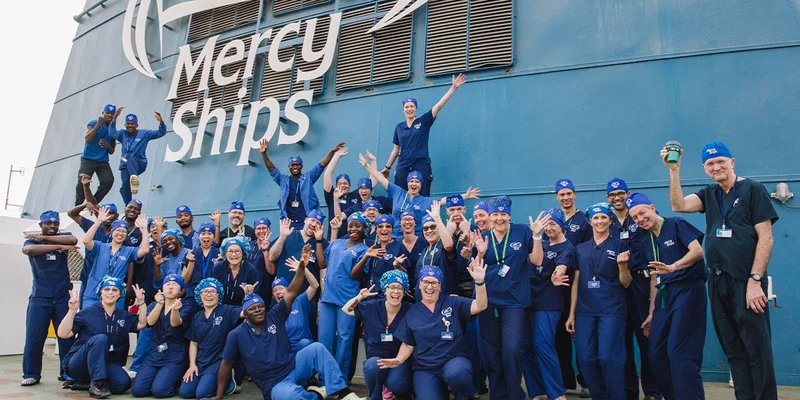
And the impact is real. These funds aren't just numbers on a spreadsheet; they translate into thousands of free surgeries each year, from restoring sight to correcting deformities. They also fuel medical training programs, empowering local healthcare workers with the skills they need to build sustainable healthcare systems.
The Africa Mercy II is based on the same design as the Global Mercy, essentially making them sister ships despite being built in different shipyards. It uses a design derived from a never-realized Stena-developed “Stena Seabird” class of RoPax vessels. Deltamarin has been responsible for the development of the vessel’s concept design in close cooperation with Mercy Ships, and for the preparation of approval design documentation for the yard. This kind of international collaboration—experts from five continents working together—is a powerful symbol of what's possible when we unite around a common goal.
When I first read about the steel cutting ceremony, I honestly just sat back and thought, "Wow, this is really happening." This isn't just a feel-good story; it's a testament to the power of human ingenuity and compassion. But here's the question that keeps swirling in my mind: How do we ensure that this incredible resource is used responsibly and ethically? How do we prevent mission creep and ensure that the focus remains on empowering local communities, not imposing Western ideals?
The Future is Being Built, One Steel Plate at a Time
The Africa Mercy II isn't just a ship; it's a symbol of hope, a testament to the power of human collaboration, and a reminder that even the most daunting challenges can be overcome with compassion and innovation. This is the kind of breakthrough that reminds me why I got into this field in the first place – to witness and share the stories of human potential being unleashed on the world.